The Cognitive Advantages of Bilingual Education
When a child learns two languages, something remarkable happens in their developing brain. The benefits stretch far beyond the ability to order food in another country or chat with relatives abroad. Bilingual education sharpens young minds, strengthens problem-solving abilities, and opens doors to a richer understanding of the world.
Below, we explore the science and practical value behind raising bilingual learners.
Enhancing Executive Functions
Executive functions are the mental skills that help children plan, focus, remember instructions, and juggle multiple tasks. Bilingual children get plenty of practice in these areas simply by managing two languages at once.
Cognitive Flexibility
Switching between languages requires the brain to adapt quickly. A bilingual child might speak one language at home and another at school, constantly adjusting to context.
This mental gymnastics builds cognitive flexibility, making it easier for children to shift between tasks, ideas, and perspectives throughout their lives.
Problem-Solving Skills
Choosing the right word, grammar, or phrase in the correct language is a small puzzle solved many times each day. Over time, this strengthens a child’s ability to analyze situations and find solutions.
Bilingual learners often approach challenges from multiple angles, drawing on the unique structures of each language.
Attention and Focus
Bilingual children must regularly filter out one language to use the other. This act of selective attention trains the brain to ignore distractions and concentrate on what matters. The result is sharper focus, a skill that pays off in classrooms, workplaces, and everyday life.
Boosting Academic Performance
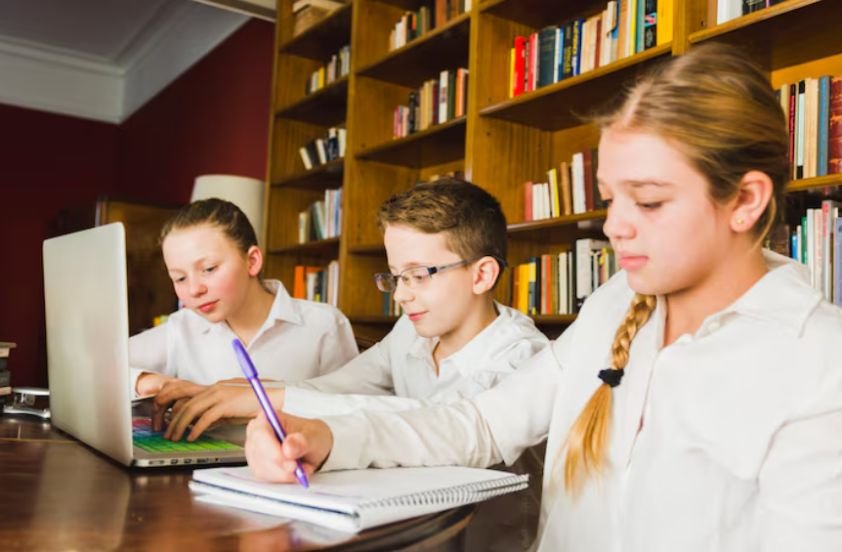
The cognitive benefits of bilingualism translate directly into the classroom. Children who learn two languages frequently outperform their monolingual peers across several subjects.
Literacy Development
Learning two languages deepens a child’s understanding of how language works. They become more aware of sounds, grammar rules, and sentence structure. This heightened awareness often leads to stronger reading and writing skills, sometimes in both languages at once.
Mathematical Reasoning

Math might seem unrelated to language, but the connection is real. The same brain regions that manage language switching also support logical thinking and pattern recognition. Bilingual children often show an edge in mathematical reasoning, tackling numbers and equations with confidence.
Critical Thinking
Exposure to two languages encourages children to think about meaning more carefully. They learn that ideas can be expressed in different ways, which nudges them to question, compare, and evaluate. This habit of mind forms the foundation of strong critical thinking.
Fostering Socio-Emotional Growth
Bilingual education shapes more than just intellect. It nurtures the emotional and social skills children need to thrive in diverse communities.
Cultural Awareness
Language and culture are deeply linked. As children learn a second language, they also absorb the traditions, values, and stories tied to it. This broadens their worldview and helps them appreciate differences rather than fear them.
Bilingual learning can also connect naturally with real-world experiences such as educational travel adventures, where children see how language, culture, history, and daily life come together outside the classroom.
Empathy and Perspective-Taking
Bilingual children regularly consider which language to use and how others might understand them. This constant awareness of another person’s point of view builds empathy. Studies suggest bilingual kids are often better at reading social cues and understanding how others feel.
Communication Skills
Speaking two languages gives children a larger toolkit for expressing themselves. They learn to adjust their message for different audiences and situations. These adaptable communication skills serve them well in friendships, school, and future careers.
Long-Term Brain Health Benefits
The advantages of bilingualism do not fade with childhood. They follow a person well into old age, protecting the brain in meaningful ways.
Cognitive Reserve
Years of managing two languages build what researchers call cognitive reserve—the brain’s ability to cope with damage and stay resilient. This mental buffer can help the brain function well even as it ages, drawing on extra neural pathways formed through bilingual experience.
Delayed Onset of Cognitive Decline
Research has found that lifelong bilinguals may experience the symptoms of age-related cognitive decline several years later than monolinguals. The constant mental workout of using two languages appears to keep the brain stronger for longer, offering a form of natural protection.
Practical Approaches to Bilingual Education
Knowing the benefits is one thing; putting them into action is another. Families and educators have several effective paths to raising bilingual children.
Immersion Programs
Immersion programs surround children with a second language for much of their school day. Subjects like science and history are taught in the target language, helping children absorb it naturally. A Spanish immersion school in San Antonio, for example, might teach core lessons in Spanish while children pick up the language through everyday use.
Dual Language Schools
Dual language schools teach students in two languages, often pairing native speakers of each. This approach benefits everyone in the classroom, as children learn from one another while mastering academic content. The shared environment also encourages friendship across cultures.
Home-Based Language Learning
Parents can support bilingual development right at home. Reading books, singing songs, watching shows, and simply talking in a second language all make a difference. Consistency matters most—small daily efforts add up to lasting fluency over time.
Families who use language learning during outings, school trips, or community activities may also think about safety tools like a kids GPS watch, especially when children are exploring new places while practicing independence.
Conclusion
Bilingual education offers a powerful pathway to unlocking a child’s full cognitive potential. By nurturing their linguistic abilities, we equip them with valuable tools for academic success, social intelligence, and lasting brain health.
The earlier children begin, the greater the rewards. Embrace the transformative power of language and give your child a brighter future.