
The Different Types of Online Programs Available Today
When parents first start looking into virtual schooling for their kids, the choices can feel overwhelming. There’s no single “online school” anymore. There are dozens of different program structures, each built for a different kind of student, family schedule, and learning style.
What works beautifully for one family might be completely wrong for another, and that’s not a flaw in the system. It’s just the reality of how much the space has grown.
Full-Time Virtual Schools

These are exactly what they sound like. Your child enrolls in an online school the same way they’d enroll in a traditional one, and that becomes their primary education. Full-time virtual schools have grown rapidly, especially after the pandemic showed millions of families that remote learning was actually possible at scale.
Public Virtual Schools
Some virtual schools operate through public school districts or charter networks. These are tuition-free for residents, follow state curriculum standards, and award the same diplomas as their brick-and-mortar counterparts. Many families don’t realize their state offers options like this, but most do.
Online education in Utah, for example, includes several public virtual programs that families can enroll their kids in without paying anything beyond regular taxes.
These schools usually provide computers, internet stipends in some cases, and structured curriculum that mirrors what kids would learn in a physical classroom.
The trade-off is that they tend to run on tighter schedules with more synchronous (live) class time, which works well for parents who want consistency but less well for families needing flexibility.
Private Virtual Schools
Private virtual schools work like traditional private schools, just delivered remotely. They charge tuition, often have specific educational philosophies (classical, Christian, Montessori, project-based), and tend to offer more curriculum customization.
The cost ranges widely. Some are surprisingly affordable, others run as expensive as elite in-person private schools.
The appeal here is usually curriculum choice. If a parent specifically wants their child learning Latin, studying primary historical sources, or following a faith-based program, private virtual schools often deliver that better than public options can.
Hybrid Programs
Hybrid models split time between online and in-person learning. Kids might attend a physical building two or three days a week and complete the rest of their coursework remotely, or they might do most of their learning online while meeting up periodically for labs, projects, and social activities.
Why Hybrid Works for Some Families
Hybrid programs can be the sweet spot for kids who need some social structure but thrive with flexibility at home.
Athletes who train heavily, performers with demanding rehearsal schedules, and kids dealing with chronic health issues often do well in hybrid setups because the in-person component keeps them connected without locking them into a rigid daily commute.
Parents who want a working partnership with a real school staff also tend to like the model, since there’s still a building, still teachers they can meet face-to-face, and still a community their child belongs to.
The Drawbacks Worth Knowing About
Hybrid programs require parents to manage two schedules at once. The kid who’s online Monday and Wednesday but in school Tuesday and Thursday lives in two different worlds, and that complexity wears on some families. Hybrid also limits where you can live.
Most programs require driving distance to the physical campus, which defeats one of the bigger advantages of online learning altogether.
Independent Study and Homeschool Programs

Not every parent wants a school dictating the schedule. Some want full control over what their child learns, when, and how. Independent study and homeschool-friendly programs serve this audience, and the options have exploded in recent years.
Curriculum Providers
These companies sell complete curriculum packages parents can use to homeschool. The parent acts as the primary teacher, but the curriculum does the heavy lifting on lesson planning, materials, and sometimes grading.
Families get to set their own pace, take vacations whenever they want, and follow their child’s interests when something sparks curiosity. The downside is that everything depends on the parent. If life gets busy or the parent isn’t comfortable teaching a particular subject, things can stall fast.
Umbrella Schools and Co-Ops
Umbrella schools are a middle ground. Families homeschool but operate under the legal and administrative umbrella of an official school, which handles record-keeping, transcripts, and compliance with state requirements.
Co-ops bring homeschool families together a few times a week for group classes, field trips, and social activities, and even educational travel adventures that help students connect lessons with real-world experiences.
Many parents find that connecting with a homeschool community changes the experience entirely. It stops feeling isolated and starts feeling normal.
Subject-Specific and Supplemental Programs
Not every online education choice is a full school. Plenty of families use online programs to supplement traditional schooling rather than replace it.
Advanced Coursework
If your child is bored in math, fascinated by a specific subject, or wants to take AP classes their local school doesn’t offer, online providers fill those gaps.
Programs like these let kids work ahead, dive deep into specialized interests, or earn college credit before they graduate high school. They’re particularly valuable for gifted students whose schools can’t always meet their pace.
Online programs can also support language-focused learning, especially for families interested in the cognitive advantages of bilingual education. These options can help students build communication skills, cultural awareness, and flexible thinking while learning beyond the standard classroom structure.
Tutoring and Catch-Up Programs
Other online programs focus on getting kids back on track. A child struggling with reading, math, or a specific subject can work with an online tutor or follow a structured catch-up curriculum at their own pace, without the stigma that sometimes comes with pulling them aside in a regular classroom.
Working with a trusted online learning provider that specializes in this kind of support often makes a meaningful difference for kids who just need extra time and attention.
Microschools and Learning Pods
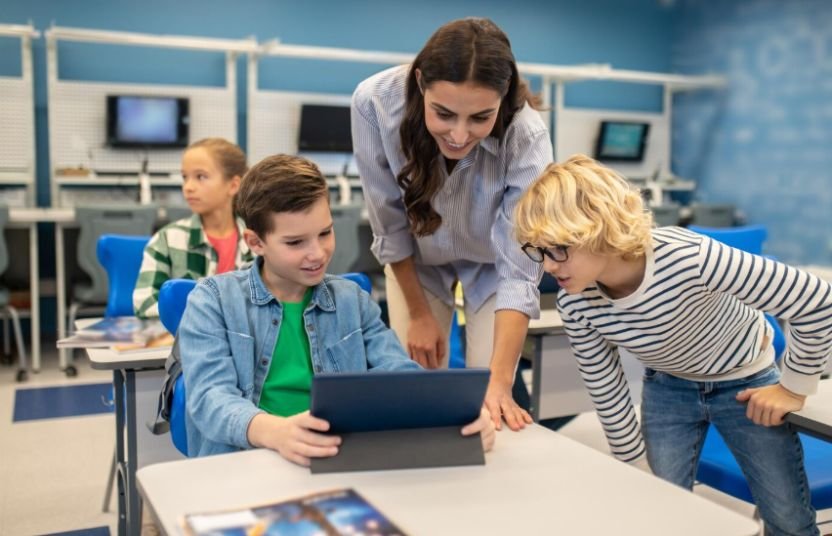
These newer models blur the lines even further. Microschools are tiny private schools, sometimes just five to fifteen students, that often combine in-person small-group learning with online curriculum.
Learning pods are similar but usually parent-organized, with families sharing the cost of a teacher or facilitator who works with a small group of kids in a home or community space.
Why They’ve Grown So Quickly
Microschools and pods exploded during the pandemic and never really shrank back. Parents who tried them often loved the personal attention their kids got, the flexibility, and the smaller social environment.
They can be expensive, but for families with the means or the ability to coordinate with neighbors, they offer a really different kind of education experience.
How to Start Sorting Through the Options
The biggest mistake parents make is trying to compare programs in the abstract. The better starting point is being honest about what your family actually needs.
How does your kid learn best? How much time can you, the parent, realistically commit? What does your work schedule allow? What kind of social structure does your child need to thrive?
Once those questions have honest answers, the right program type usually starts becoming clearer. The wrong fit, even for great programs, can make the whole experience harder than it needs to be.
Conclusion
Online education has become diverse enough that almost every family can find a setup that fits their kid’s needs, schedule, and learning style.
Taking time to explore your options with a knowledgeable advisor can help you understand which program type actually matches your family before you make a long-term commitment.