
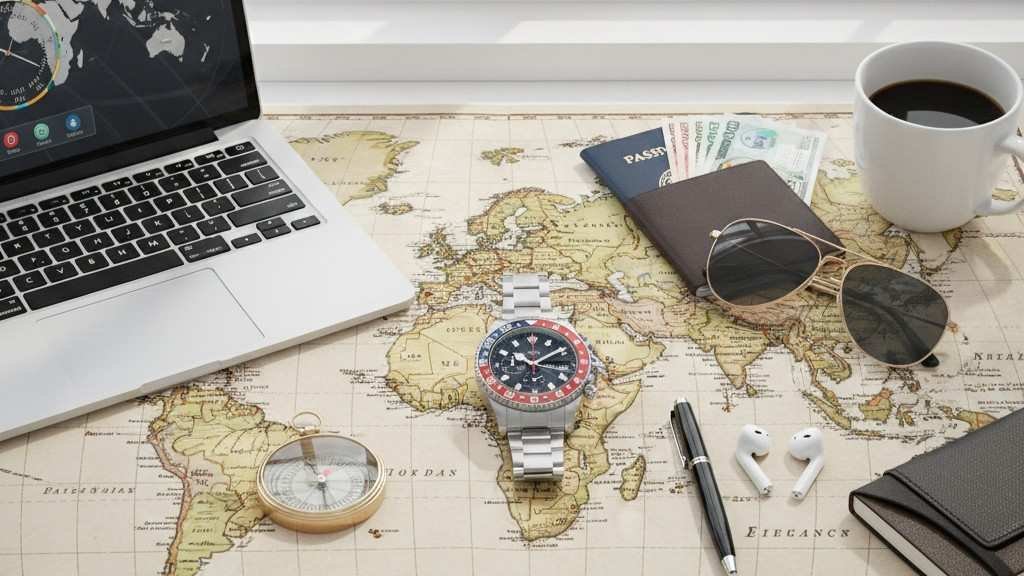
What Does GMT Stand for in Watches? A Complete Guide to GMT Watches
Have you ever looked at a watch and noticed that it has a mysterious fourth hand? So, what does GMT stand for in watches? I remember the first time I saw a GMT watch. I thought, “What is that extra hand for?” You know, the one that circles the dial every 24 hours, unlike the regular hour, minute, and second hands?
It wasn’t until I started traveling more that I realized how useful it could be. I’ve explained everything you need to know about GMT watches. Their history, how they work, and why they’re a must-have for globe-trotters and time-zone jugglers like us.
What Does GMT Stand for in Watches?
In watchmaking, GMT stands for Greenwich Mean Time. It’s a time standard that dates back to the 19th century and was established at the Royal Observatory in Greenwich, London. GMT is essentially the baseline for the world’s time zones, and a GMT watch is designed to track two or more time zones simultaneously on a single dial. This feature is particularly helpful when you’re traveling across the globe, managing business across different regions, or simply want to keep track of home time while living abroad.
Key Characteristics of GMT Watches
Below discussed are the key features of GMT watches.

What Makes a GMT Watch Different from a Regular Watch?
Unlike a regular watch, which typically has just three hands (hour, minute, second), a GMT watch has a fourth hand—the GMT hand. This hand moves around the dial once every 24 hours, which is half the speed of the standard hour hand. The GMT hand points to a 24-hour scale that is either engraved on a rotating bezel or printed directly on the watch dial, helping the wearer track the second time zone.
How Does the 24-Hour Scale Work?
The GMT hand points to a 24-hour scale, which helps you tell the time in a second time zone. This is especially useful for those who travel frequently or work with colleagues in different parts of the world. The 24-hour scale can either be printed on the watch face or marked on a rotating bezel, and it allows you to differentiate between daytime and nighttime hours in the second time zone, which leads us to another cool feature.
Day/Night Differentiation: Why Does the Bezel Matter?
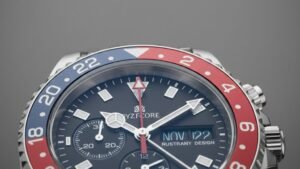
Many GMT watches feature a two-tone bezel, commonly known as a “Pepsi” bezel when it’s red and blue, which helps distinguish between daytime and nighttime hours in the second time zone. This feature was originally designed to help pilots and travelers, but it’s also just a visually striking way to manage two different times at a glance. A fun fact: the Pepsi bezel became so iconic that it’s still one of the most recognizable features of a GMT watch.
A Brief History of the GMT Watch
The concept of Greenwich Mean Time dates back to 1884 when the International Meridian Conference established the Royal Observatory in Greenwich, London, as the “zero” point for the world’s time zones. GMT became the standard for global timekeeping, and it was widely adopted by the scientific community and navigation systems.
The Origins of the GMT Watch
The GMT watch was popularized in the 1950s, primarily for commercial pilots. In 1954, Pan Am commissioned Rolex to create the GMT-Master watch, specifically designed for flight crews to track both local time and Greenwich Mean Time simultaneously. This was a game-changer for pilots who needed a reliable way to keep track of both time zones during long international flights.
Who Were the Pioneers of the GMT Function?
While Rolex is the most famous brand associated with the GMT watch, it wasn’t the first. The Glycine Airman, released in 1953, was one of the first watches to offer a 24-hour second time zone tracking function. The GMT-Master was created shortly after, cementing Rolex’s role in pioneering the GMT movement. Today, while UTC (Coordinated Universal Time) has largely replaced GMT in the scientific world. The term GMT remains the standard in the watch industry, especially for brands like Rolex, Tudor, and Omega.
How to Use a GMT Watch: A Step-by-Step Guide
Now that you know the history and features, let’s talk about how to use your GMT watch to track multiple time zones like a pro. Whether you’re traveling or just need to know the time in a different city, this step-by-step guide will walk you through the process.
Step 1: Set the Hour and Minute Hands
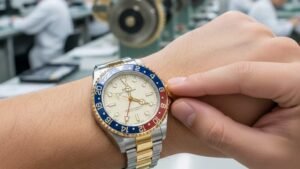
Start by pulling the crown of your GMT watch out to the first position, which allows you to set the time. Adjust the hour and minute hands to reflect your local time or the time zone you’re currently in.
Step 2: Set the GMT Hand
Pull the crown out to the second position. The GMT hand should be adjusted independently of the regular hour hand. Rotate the crown to set the GMT hand to the time zone you want to track. This could be your home time zone or a city you need to keep tabs on while traveling.
Step 3: Adjust the 24-Hour Scale
If your watch features it, you’ll need to use the rotating bezel to adjust so that the 24-hour scale aligns with the GMT hand. This will help you easily read the time in the second time zone.
Step 4: Set the Date
Finally, push the crown back to its original position and adjust the date if necessary. You now have a fully functional GMT watch that can keep track of two time zones simultaneously.
Frequently Asked Questions (FAQs)
1. Can I Use a GMT Watch to Track More Than Two Time Zones?
Yes! Some GMT watches offer additional complications, such as World Time or dual-time features, allowing you to track more than two time zones. This can be especially useful for those who frequently travel or manage international projects.
2. Is a GMT Watch Only for Pilots and Travelers?
No, a GMT watch is useful for anyone who needs to keep track of more than one time zone. Whether you’re a businessperson with global clients, a world traveler, or even just someone who loves the design and functionality, a GMT watch adds practical value to your collection.
3. How Do I Tell the Time in the Second Time Zone on a GMT Watch?
To read the time in the second time zone, simply look at the GMT hand. The GMT hand points to the 24-hour scale, which helps you differentiate between daytime and nighttime hours. Depending on your watch’s design, this scale may be on the dial or on a rotating bezel.
The Power of the GMT Watch
So, now you know what does GMT stand for in watches and how these timepieces help you track time across the globe. Whether you’re a jet-setter, a business traveler, or simply love having a functional and stylish accessory, a GMT watch is an amazing tool to keep track of multiple time zones. As someone who’s used a GMT watch in my own travels, I can tell you—it’s a total game-changer.
Don’t be afraid to dive into the world of GMT watches. With a little practice, you’ll master the art of tracking time in multiple places, and look stylish while doing it.


