
How Smartwatches Track Health Metrics (Heart Rate, Sleep, SpO₂, Stress, etc.)
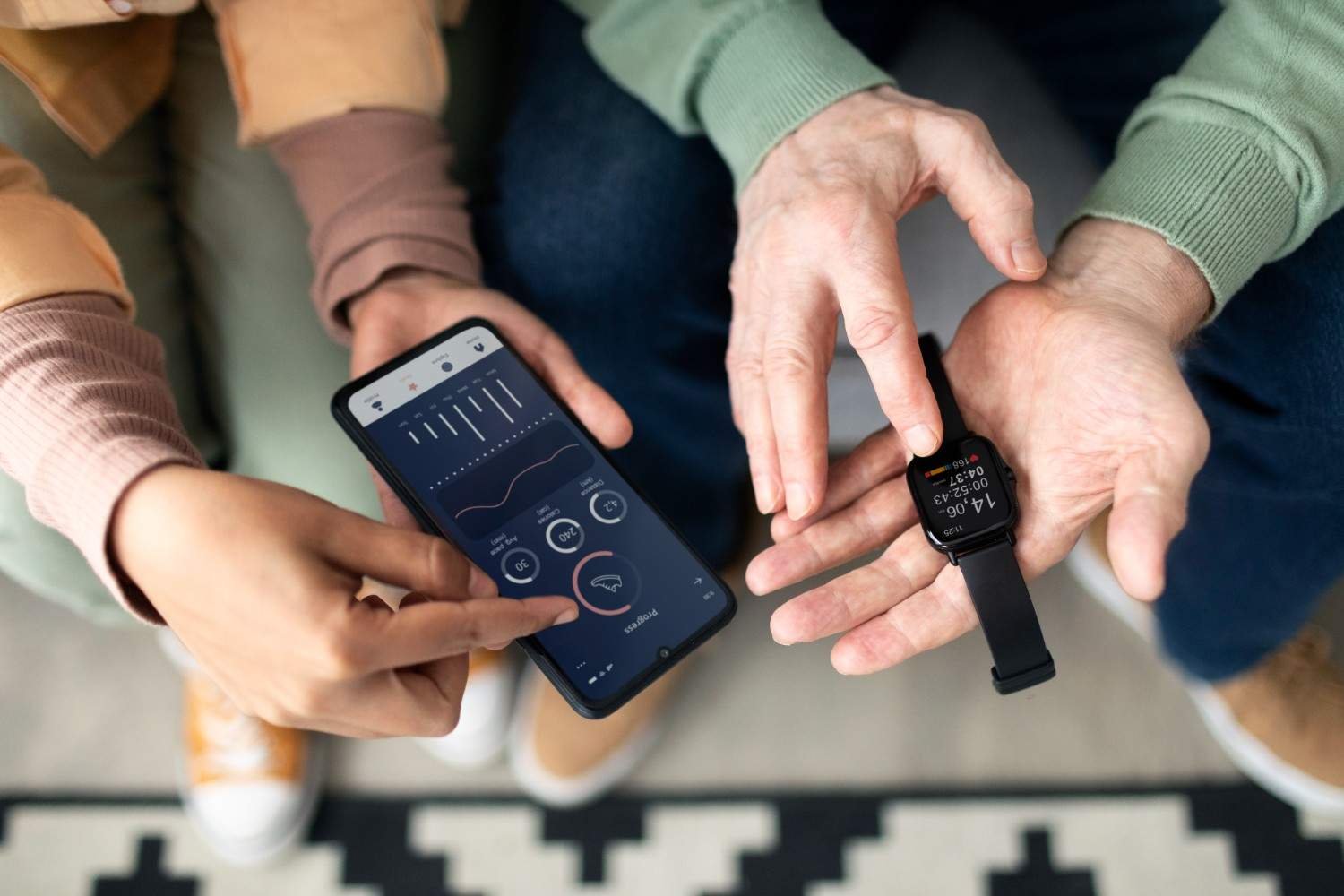
If you’re anything like me, you’ve probably become quite attached to your smartwatch. It’s that tiny tech companion that stays glued to your wrist, providing real-time insights into your health. But have you ever wondered how exactly smartwatches track health metrics like heart rate, sleep, SpO₂, and stress? As someone who’s deep into health tech, I’ve done some digging and am excited to break it down for you.
Smartwatches have evolved far beyond being just timekeepers; they’re now sophisticated tools that offer a window into your body’s most important data. These wearable devices use advanced sensors to collect data, process it, and deliver it back to us in a way that’s easy to understand. So, let’s explore how these devices monitor key health metrics and why they’re becoming so integral to our daily routines.
The Sensors Behind the Magic
At the heart of any smartwatch’s health tracking capabilities are the sensors embedded in the device. These sensors help detect physiological changes in your body. Smartwatches typically use a combination of optical sensors, accelerometers, and gyroscopes to monitor everything from heart rate to movement.
Optical Sensors: Measuring Heart Rate and SpO₂
The most common sensor you’ll find on your smartwatch is the optical sensor. These sensors use a technology called photoplethysmography (PPG) to track both heart rate and blood oxygen levels (SpO₂).
PPG works by shining light through your skin using LEDs and measuring how much light is reflected back. As blood moves through your veins, it absorbs and reflects light differently, which helps the watch calculate how much oxygen is in your blood (SpO₂) and how fast your heart is beating (heart rate). It’s kind of like a little science lab right on your wrist!
Accelerometers and Gyroscopes: Tracking Movement and Sleep
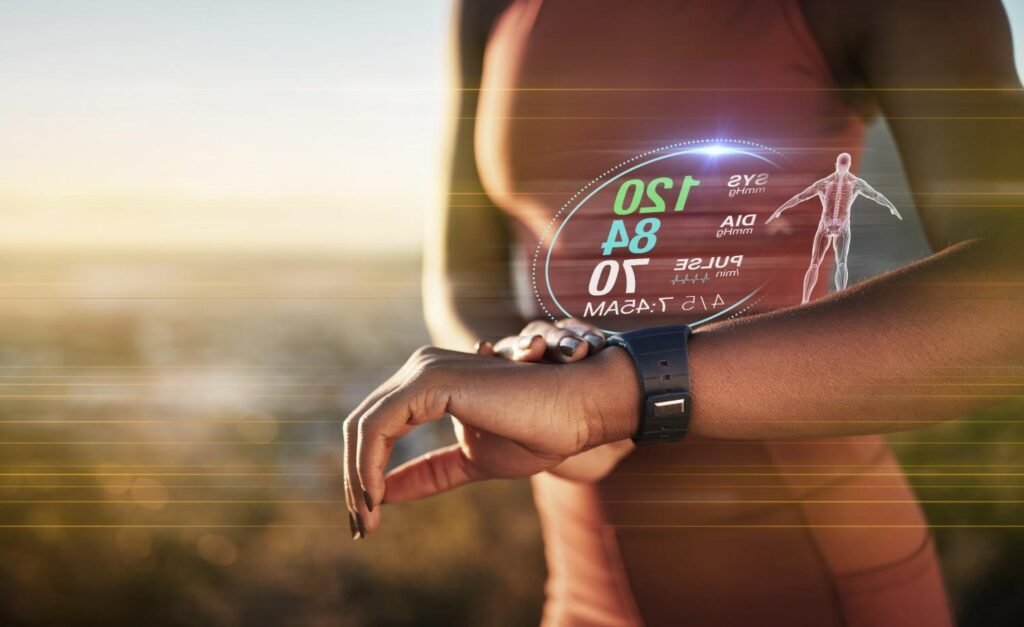
To monitor movement, smartwatches also rely on accelerometers and gyroscopes. These sensors detect changes in acceleration and the position of your wrist to measure everything from steps to sleep stages.
- Accelerometers help track your physical activity by counting steps, monitoring your workout intensity, and even detecting if you’re sitting or standing.
- Gyroscopes provide information about the orientation of your wrist, which is useful for determining if you’re asleep or awake, and how much you’re moving during the night.
Heart Rate Variability (HRV) and Stress Monitoring
HRV is another important metric that smartwatches track, often as a way to gauge your stress levels. By measuring the variation in time between each heartbeat, HRV can tell you a lot about how your body is coping with stress or recovery. Higher HRV generally indicates that your body is in a relaxed state, while lower HRV could point to stress or fatigue.
Modern smartwatches can provide insights into your stress levels by monitoring your HRV along with other metrics, such as heart rate and movement. So, if you’ve ever gotten a “stress level high” alert from your watch, it’s likely based on these readings.
Key Health Metrics Tracked by Smartwatches

1. Heart Rate: Your Body’s Rhythm
Heart rate is one of the most fundamental metrics tracked by smartwatches. Whether you’re lounging on the couch or crushing your workout, your watch is constantly monitoring your heart rate. It helps you gauge your fitness levels and can even alert you if your heart rate falls outside the normal range.
Why It Matters:
- Resting heart rate can indicate overall cardiovascular fitness.
- Active heart rate gives insights into workout intensity and fitness progress.
2. Sleep Tracking: Understanding Your Rest
Most people understand that sleep is essential for health, but tracking your sleep patterns can be eye-opening. Smartwatches use movement and heart rate data to estimate how much time you spend in various sleep stages (light, deep, and REM). Some watches even offer insights on how well you’re recovering, providing a sleep score based on your sleep quality.
Why It Matters:
- Poor sleep can affect mental and physical health.
- Monitoring sleep trends helps identify issues like insomnia or sleep apnea.
3. SpO₂ (Blood Oxygen Levels): Oxygen Delivery
Tracking SpO₂ is especially useful for individuals who live at higher altitudes, engage in intense workouts, or just want to know how well their body is oxygenating. This measurement shows how much oxygen is in your blood, and some smartwatches are even capable of alerting you if your SpO₂ levels drop too low — a sign that might require medical attention.
Why It Matters:
- Low SpO₂ levels can indicate respiratory issues or cardiovascular problems.
- Monitoring SpO₂ is especially helpful for athletes or those with respiratory conditions.
4. Stress Tracking: Your Body’s Response to Tension
Using heart rate variability (HRV) and other sensors, many smartwatches can estimate your stress levels throughout the day. If your HRV drops and your heart rate increases, your watch might notify you that it’s time to take a breather.
Why It Matters:
- Managing stress is key to preventing burnout and supporting mental health.
- Stress monitoring helps you become more mindful of your physical and emotional state.
How Accurate Are Smartwatches?
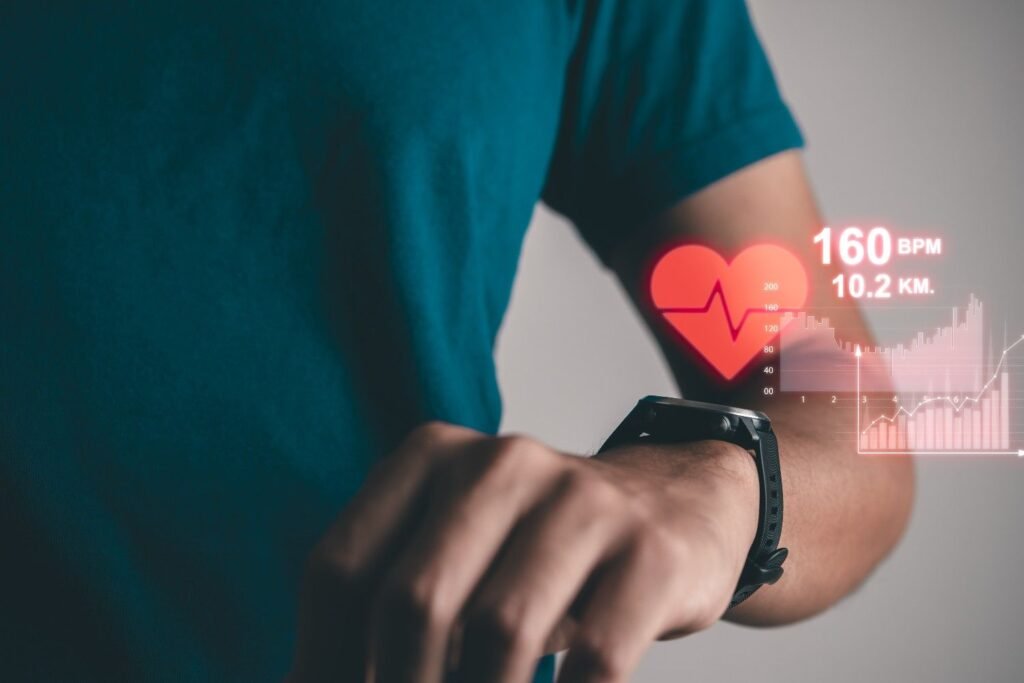
One question that often comes up is: How accurate are these health metrics? The short answer: they’re good, but not perfect.
Smartwatches provide great trend data, which is incredibly useful for tracking long-term health changes, but they aren’t as precise as clinical-grade equipment. For example, while the heart rate sensor is fairly accurate for most users, it can be affected by movement, the fit of the watch, and even skin tone. Similarly, SpO₂ measurements may not be as reliable as those taken by a traditional finger pulse oximeter.
However, these devices excel in giving us actionable data on a daily basis and can help identify potential health issues before they become significant concerns.
Frequently Asked Questions (FAQs)
1. How accurate is a smartwatch for tracking heart rate?
Smartwatches generally offer reliable heart rate monitoring during most activities. However, accuracy can decrease during high-intensity exercise or if the watch is not worn snugly on the wrist. For precise measurements, medical-grade devices are recommended.
2. Can a smartwatch track sleep stages accurately?
Smartwatches use motion sensors and heart rate data to estimate sleep stages, but it’s not as accurate as polysomnography used in sleep labs. That said, for most users, smartwatch sleep tracking provides a good estimate of sleep patterns.
3. How does a smartwatch track stress levels?
Smartwatches measure stress primarily through heart rate variability (HRV). When your body is under stress, HRV typically decreases. Some devices use this data along with other metrics to estimate your stress levels and offer suggestions for relaxation.
4. Is SpO₂ tracking reliable on smartwatches?
While SpO₂ readings from a smartwatch are useful for tracking trends, they are not as accurate as clinical equipment like a pulse oximeter. It’s important to use smartwatch SpO₂ data as a general guideline rather than a definitive measurement.
Conclusion
Smartwatches have come a long way in helping us stay on top of our health. How smartwatches track health metrics (heart rate, sleep, SpO₂, stress, etc.) is truly impressive, offering everyday users valuable insights that were once only available in clinical settings.
Although they’re not flawless, smartwatches give us the power to keep tabs on our health all day long, helping us make smarter choices about fitness and lifestyle. Whether it’s tracking workouts, managing stress, or making sure you’re getting enough rest, your smartwatch becomes a trusted partner in your wellness journey.
By understanding how these health metrics work and what they reveal, you can unlock the full potential of your device, taking more control over both your physical and mental well-being.